
Batang Toru Ecosystem
Asia > Indonesia > Batang Toru Ecosystem
Français | Português | Español | Bahasa Indonesia | Melayu
Summary
- Tapanuli orangutans (Pongo tapanuliensis) are present in the Batang Toru Ecosystem.
- It has been estimated that 767 (CI: 231-1,597) individuals occur in the site.
- The orangutan population trend is decreasing.
- The site has a total size of 1,023 km².
- Key threats to orangutans include the construction of a hydropower plant, deforestation, and killings due to human-orangutan conflict and sometimes for bushmeat.
- Conservation activities have focused on restoring habitat corridors, education and awareness campaigns, bolstering traditional agricultural practices and “orangutan-friendly” produce.
- The site is the only place where the Tapanuli orangutan occurs.

Site characteristics
The Batang Toru ecosystem is located in the province of North Sumatra, Indonesia. The site is the only place where the Tapanuli orangutan (Pongo tapanuliensis) occurs (Wich et al. 2019). Rich in faunal biodiversity, 91 species have been recorded at the site, including tapirs, sun bears, serow, golden cat, and the very rare Sumatran tiger. Bird surveys conducted between 2003 and 2015 have documented 311 species at the site. Although there are areas within Batang Toru that are protected, there are key areas that are still not protected (Batang Toru).
Table 1. Basic site information for Batang Toru Ecosystem
| Species | Pongo tapanuliensis |
| Area | 1,023 km² |
| Coordinates | Lat: 1.591162 , Lon: 99.064637 |
| Type of site | Non-protected area |
| Habitat types | Subtropical/tropical dry forest, Subtropical/tropical moist lowland forest, Agricultural land, Subtropical/tropical heavily degraded former forest, Subtropical/tropical moist montane forest |
| Type of governance |
Types of sites Governance types Habitat types

Ape status
The Tapanuli orangutan was first described as a distinct species in 2017 (Nater et al. 2017). Within the Batang Toru Ecosystem, the species is found in three main forest blocks: the west block, with 581 individuals (95% CI 180–1,201); the east block, with 162 individuals (95% CI 46–341), and the Sibual-buali Reserve with 24 individuals (95% CI 6–53) and possibly small populations to the north and/or in the Lubuk Raya Reserve (Wich et al. 2019). About 85% of the total population is under some level of protection; the remaining 15% of their geographic range is land for other uses (Wich et al. 2019).
Table 2. Ape population estimates reported for Batang Toru Ecosystem
| Species | Year | Occurrence | Encounter or vistation rate (nests/km; ind/day) | Density estimate [ind./ km²] (95% CI) | Abundance estimate (95% CI) | Survey area | Sampling method | Analytical framework | Source | Comments | A.P.E.S. database ID |
|---|---|---|---|---|---|---|---|---|---|---|---|
| Pongo tapanuliensis | 2000-2012 | 767 (231-1,597) | Batang Toru, entire area | Line transects | Wich et al. 2019 |
Sampling methods Analytical frameworks
Threats
Table 3. Threats to apes reported for Batang Toru Ecosystem
| Category | Specific threats | Threat level | Description | Year of threat |
|---|---|---|---|---|
| 5 Biological resource use | 5.1 Hunting & collecting terrestrial animals | Medium (30-70% of population affected) | Illegal killing of orangutans as a result of human-wildlife conflict situations. Orangutans are also partly hunted for bushmeat (Wich et al. 2012; Wich et al. 2019). | 2012-Ongoing (2019) |
| 5 Biological resource use | 5.1.5 Persecution/human wildlife conflict | Medium (30-70% of population affected) | Illegal killing of orangutans as a result of human-wildlife conflict situations. Orangutans are also partly hunted for bushmeat (Wich et al. 2012, Wich et al. 2019, Sherman et al. 2022). | 2012-Ongoing (2022) |
| 4 Transportation & service corridors | 4.1 Roads & railroads | Medium (30-70% of population affected) | In connection to the construction of the hydroelectric dam, over 20 km of road and 14 km of electricity transmission lines are planned to cross through orangutan habitat (Wich et al. 2019). | Ongoing (2019) |
| 9 Pollution | 9.4 Garbage & solid waste | Present (unknown severity) | In connection to the construction of the hydroelectric dam, at least 3 million m3 of excavated spoil is planned to be dumped in orangutan habitat (Wich et al. 2019). | Ongoing (2019) |
| 3 Energy production & mining | 3.2 Mining & quarrying | Low (up to 30% of population affected) | Gold and silver mining (batangtoru.org). | Ongoing (2023) |
| 5 Biological resource use | 5.3 Logging & wood harvesting | Low (up to 30% of population affected) | Deforestation as a result of land-use change (e.g., infrastructure development, agricultural expansion, plantations). | Ongoing (2023) |
| 7 Natural system modifications | 7.2 Dams & water management/use | High (more than 70% of population affected) | The construction of a hydropower plant, proposed by North Sumatera Hydro Energy, a Jakarta-based firm, implemented by Sinohydro, China’s national hydropower agency. (Laurance et al. 2020). The dam was planned in an area with the highest Tapanuli orangutan densities (Wich et al. 2019). The construction of the dam has already commenced (Wich pers. comm. 2023). | Ongoing (2023) |
Conservation activities
Since 2005, the Sumatran Orangutan Conservation Programme (SOCP) has worked towards the protection of Batang Toru. After a decade, SOCP has succeeded in establishing protected status for a large proportion of the forests. SOCP works with the Forestry Department of Indonesia to establish management in the field through their Forest Management Unit. SOCP also implements community awareness and education programmes with the communities living near the forest edge and local schools (SOCP).
The People Resources and Conservation Foundation (PRCF) in partnership with the local grassroots NGO Sumatran Rainforest Institute (SRI) is implementing an ARCUS supported community-based corridor program in South Tapanuli in liaison with five stakeholder villages, aiming to maintain forest cover between Sibual Buali Nature Reserve and the West Block of the Batang Toru Ecosystem and increase the tolerance towards orangutans in a shared landscape matrix. This corridor program is designed to prevent genetic isolation of orangutans as well as other endangered arboreal species such as Siamang and Agile Gibbons that otherwise become stranded in Sibual Buali Nature Reserve. The PRCF-SRI consortium is working on mitigating human-orangutan conflict and land conversion through working hand in hand with stakeholder communities in the corridor landscape in order to establish a landscape matrix in which orangutans are tolerated and free to disperse through. The program is planning to bolster already existing traditional agroforestry practices and strengthen customary forest management regimes to maintain a patchwork of different land use gradients ranging from natural forest to intensively managed agroforests. To mitigate the livelihood impacts of crop raiding (especially during the durian season) and in turn change attitudes towards orangutans the program aims to establish Village Self-help Groups and farmer cooperatives that benefit from better market connections for “orangutan-friendly produce (e.g. coffee, cocoa, vanilla). The overall long-term aim is to promote environmental stewardship by local stakeholder communities through institutional capacity building to sustainably manage a landscape that is functioning as an ecological corridor for the critically endangered Tapanuli Orangutan and at the same time is the livelihood source for local people.
Table 4. Conservation activities reported for Batang Toru Ecosystem
| Category | Specific activity | Description | Implementing organization(s) | Year of activity |
|---|---|---|---|---|
| 5 Protection & restoration | 5.2 Legally protect ape habitat | Protected areas existing within the site (Lubuk Raya Nature Reserve, Dolok Sipirok Nature Reserve, Dolok Sibual-Buali Nature Reserve). | 1982-Ongoing (2025) | |
| 2 Counter-wildlife crime | Other | Mitigation of human wildlife conflict activities were reported, but details are unknown (Sherman et al. 2022). | Ongoing (2022) | |
| 1 Development impact mitigation | 1.6 Change of crop (i.e., to a crop less palatable to apes) | To mitigate the livelihood impacts of crop raiding (especially during the durian season) and in turn change attitudes towards orangutans PRCF's corridor program aims to establish Village Self-help Groups and farmer cooperatives that benefit from better market connections for “orangutan-friendly” produce (e.g. coffee, cocoa, vanilla) (Wich pers. comm. 2023). | Ongoing (2023) | |
| 4 Education & awareness | 4.1 Educate local communities about apes and sustainable use | The Sumatran Orangutan Conservation Programme implement community awareness and education programmes with the communities living near the forest edge and local schools (SOCP, Wich pers. comm. 2023). | Ongoing (2023) | |
| 5 Protection & restoration | 5.6 Habitat restoration | Corridor program by the (PRCF) designed to prevent genetic isolation of orangutans as well as other endangered arboreal species such as Siamang and Agile Gibbons that otherwise become stranded in Sibual Buali Nature Reserve (Wich pers. comm. 2023). | Ongoing (2023) |
-
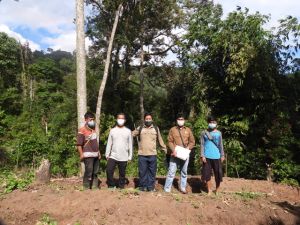
© PRCF Indonesia -
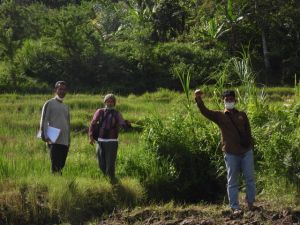
© PRCF Indonesia -
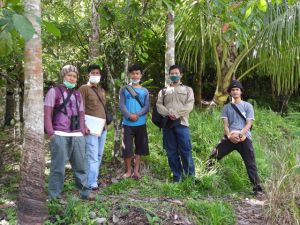
© PRCF Indonesia


Challenges
Table 5. Challenges reported for Batang Toru Ecosystem
| Challenges | Specific challenges | Source | Year(s) |
|---|---|---|---|
| 4 Institutional support | 4.1 Lack of law enforcement | Wich et al. 2012 | |
| 4 Institutional support | 4.2 Lack of government support | Wich et al. 2019; Laurance et al. 2020 | |
| 1 Site management | 1.2 Need for improved coordination | Wich et al. 2019 |

Enablers
Table 6. Enablers reported for Batang Toru Ecosystem
| Enablers | Specific enablers | Source | Year(s) |
|---|---|---|---|
| 1 Site management | |||
| 2 Resources and capacity | |||
| 3 Engaged community | |||
| 4 Institutional support | |||
| 5 Ecological context | |||
| 6 Safety and stability |
Research activities
SOCP staff are present at the Batang Toru Monitoring Station, established in 2006. The station is the only one focused on studying the Tapanuli orangutans.

Documented behaviours
Table 7. Behaviours documented for Batang Toru Ecosystem
| Category | Behavior | Observation type | Prevalence | Observation dates | Source | Habituation | Species | Comment |
|---|---|---|---|---|---|---|---|---|
| Not reported |
Exposure to climate change impacts
External links
Mongabay- Batang Toru Hydropower Plant
Sumatran Orangutan Conservation Programme
References
Laurance, W. F., Wich, S. A., Onrizal, O., Fredriksson, G., Usher, G., Santika, T., Byler, D., Mittermeier, R., Kormos, R., Williamson, E. A., & Meijaard, E. (2020). Tapanuli orangutan endangered by Sumatran hydropower scheme. Nature Ecology & Evolution, 4(11), 1438-1439. https://doi.org/10.1038/s41559-020-1263-x
Nater, A., Mattle-Greminger, M. P., Nurcahyo, A., Nowak, M. G., de Manuel, M., Desai, T., Groves, C., Pybus, M., Sonay, T. B., Roos, C., Lameira, A. R., Wich, S. A., Askew, J., Davila-Ross, M., Fredriksson, G., de Valles, G., Casals, F., Prado-Martinez, J., Goossens, B., … Krützen, M. (2017). Morphometric, Behavioral, and Genomic Evidence for a New Orangutan Species. Current Biology, 27(22), 3487-3498.e10. https://doi.org/10.1016/j.cub.2017.09.047
Wich, S.A., Fredriksson, G. M., Usher, G., Peters, H. H., Priatna, D., Basalamah, F., Susanto, W., & Kühl, H. (2012). Hunting of Sumatran orang-utans and its importance in determining distribution and density. Biological Conservation, 146(1), 163-169. https://doi.org/10.1016/j.biocon.2011.12.006
Wich, Serge A., Fredriksson, G., Usher, G., Kühl, H. S., & Nowak, M. G. (2019). The Tapanuli orangutan: Status, threats, and steps for improved conservation. Conservation Science and Practice, 1(6), e33. https://doi.org/10.1111/csp2.33
Wich, Serge A., United Nations Environment Programme, Great Apes Survival Project, World Agroforestry Centre, & GRID--Arendal (Eds.). (2011). Orangutans and the economics of sustainable forest management in Sumatra. United Nations Environment Programme ; Great Apes Survival Partnership : Pan Eco : Yayasan Ekosistem Lestari : World Agroforestry Centre ; GRID-Arendal
Sherman, J., Voigt, M., Ancrenaz, M., Wich, S. A., Qomariah, I. N., Lyman, E., Massingham, E., & Meijaard, E. (2022). Orangutan killing and trade in Indonesia: Wildlife crime, enforcement, and deterrence patterns. Biological Conservation, 276, 109744. https://doi.org/10.1016/j.biocon.2022.109744
Page created by: Serge Wich & Sinan Serhadli Date: 2023-11-09