
Proposed Kwa National Park: Difference between revisions
Created page with "West Africa > Liberia > Proposed Kwa National Park '''[https://apesatlas-iucnapesportal-org.translate.goog/index.php/Proposed_Kwa_National_Park?_x_tr_sl=auto&_x_tr_tl=fr&_x_tr_hl=en&_x_tr_pto=wapp Français]''' | '''[https://apesatlas-iucnapesportal-org.translate.goog/index.php/Proposed_Kwa_National_Park?_x_tr_sl=auto&_x_tr_tl=pt&_x_tr_hl=en&_x_tr_pto=wapp Português]''' | '''[https://apesatlas-iucnapesportal-org.translate.goog/index.php/Proposed_Kwa_Nationa..." |
No edit summary |
||
| (5 intermediate revisions by the same user not shown) | |||
| Line 13: | Line 13: | ||
* The main threats are poaching and habitat loss due to farming. | * The main threats are poaching and habitat loss due to farming. | ||
* Conservation activities include biomonitoring and employment of ecoguards. | * Conservation activities include biomonitoring and employment of ecoguards. | ||
= Site characteristics = | = Site characteristics = | ||
The site is situated to the northwest of [[Sapo National Park]]. The Wild Chimpanzee Foundation (WCF) have collected nearly 3,000 observations of wildlife at the site; in addition to the critically endangered Western chimpanzees (''Pan troglodytes verus''), pygmy hippos (''Hexaprotodon liberiensis''), pangolins (''Smutsia gigantea''), and forest elephants (''Loxodonta africana'') inhabit the area (WCF 2018). | The site is situated to the northwest of [[Sapo National Park]]. The Wild Chimpanzee Foundation (WCF) have collected nearly 3,000 observations of wildlife at the site; in addition to the critically endangered Western chimpanzees (''Pan troglodytes verus''), pygmy hippos (''Hexaprotodon liberiensis''), pangolins (''Smutsia gigantea''), and forest elephants (''Loxodonta africana'') inhabit the area ([[#R01504|WCF 2018]]). | ||
'''Table 1. Basic site information for Proposed Kwa National Park''' | '''Table 1. Basic site information for Proposed Kwa National Park''' | ||
| Line 45: | Line 42: | ||
[[Types of sites]] [[Governance types]] [[Habitat types]] | [[Types of sites]] [[Governance types]] [[Habitat types]] | ||
= Ape status = | = Ape status = | ||
Based on a 2017 transect survey of the area, formerly known as Krahn-Bassa Proposed Protected Area, the chimpanzee population was approximately 531 individuals (WCF 2018). | Based on a 2017 transect survey of the area, formerly known as Krahn-Bassa Proposed Protected Area, the chimpanzee population was approximately 531 individuals ([[#R01504|WCF 2018]]). | ||
'''Table 2. Ape population estimates reported for Proposed Kwa National Park''' | '''Table 2. Ape population estimates reported for Proposed Kwa National Park''' | ||
| Line 63: | Line 61: | ||
!Comments | !Comments | ||
!A.P.E.S. database ID | !A.P.E.S. database ID | ||
|- | |- | ||
|''Pan troglodytes verus'' | |''Pan troglodytes verus'' | ||
| Line 88: | Line 73: | ||
|WCF 2024 | |WCF 2024 | ||
|Survey effort 1,604.04 km | |Survey effort 1,604.04 km | ||
| | |||
|- | |||
|''Pan troglodytes verus'' | |||
|2017 | |||
| | |||
|0.95 | |||
|0.151 | |||
|531 (321-1028) | |||
|Proposed Kwa National Park (Krahn-Bassa Proposed Protected Area) | |||
|Line transects | |||
| | |||
|[[#R01504|WCF 2018]] | |||
| | |||
| | | | ||
|} | |} | ||
[[Sampling methods]] [[Analytical frameworks]] | [[Sampling methods]] [[Analytical frameworks]] | ||
= Threats = | = Threats = | ||
The WCF surveyed 455 households in the proposed protected area in 2017. This socioeconomic survey showed that communities in the area have very limited access to public services, vital resources and infrastructure (WCF 2018). Bushmeat hunting and trade are primary activities in the surveyed communities. Anthropogenic pressure is high in and around the area, due to logging, mining, and farming activities. In addition, WCF’s survey revealed some chimpanzees kept as pets in the communities, and one chimpanzee was confiscated by the Forestry Development Authority (WCF 2018). | The WCF surveyed 455 households in the proposed protected area in 2017. This socioeconomic survey showed that communities in the area have very limited access to public services, vital resources and infrastructure ([[#R01504|WCF 2018]]). Bushmeat hunting and trade are primary activities in the surveyed communities. Anthropogenic pressure is high in and around the area, due to logging, mining, and farming activities. In addition, WCF’s survey revealed some chimpanzees kept as pets in the communities, and one chimpanzee was confiscated by the Forestry Development Authority ([[#R01504|WCF 2018]]). | ||
'''Table 3. Threats to apes reported for Proposed Kwa National Park''' | '''Table 3. Threats to apes reported for Proposed Kwa National Park''' | ||
| Line 103: | Line 102: | ||
!Description | !Description | ||
!Year of threat | !Year of threat | ||
|- | |||
|1 Residential & commercial development | |||
|1.1 Residential areas | |||
|Low (up to 30% of population affected) | |||
|Observation of few settlements (WCF 2024). | |||
|Ongoing (2024) | |||
|- | |- | ||
|2 Agriculture & aquaculture | |2 Agriculture & aquaculture | ||
|2.1 Annual & perennial non-timber crops | |2.1 Annual & perennial non-timber crops | ||
|High (more than 70% of population affected) | |High (more than 70% of population affected) | ||
|A survey by the WCF reported that approximately 82% of surveyed households are farming in and around the site (WCF 2018). Cocoa farming encroachment (WCF 2024). | |A survey by the WCF reported that approximately 82% of surveyed households are farming in and around the site ([[#R01504|WCF 2018]]). Cocoa farming encroachment (WCF 2024). | ||
|2018-Ongoing (2024) | |2018-Ongoing (2024) | ||
|- | |- | ||
| Line 113: | Line 118: | ||
|3.2 Mining & quarrying | |3.2 Mining & quarrying | ||
|Low (up to 30% of population affected) | |Low (up to 30% of population affected) | ||
|Former artisanal gold mining pits are present at the site (Rödel & Glos 2019). The WCF has also reported the presence of mining activities (WCF 2018); few observations of mining in 2024 (WCF 2024). | |Former artisanal gold mining pits are present at the site ([[#R01503|Rödel & Glos 2019]]). The WCF has also reported the presence of mining activities ([[#R01504|WCF 2018]]); few observations of mining in 2024 (WCF 2024). | ||
|2018-Ongoing (2024) | |2018-Ongoing (2024) | ||
|- | |- | ||
| Line 119: | Line 124: | ||
|5.1 Hunting & collecting terrestrial animals | |5.1 Hunting & collecting terrestrial animals | ||
|High (more than 70% of population affected) | |High (more than 70% of population affected) | ||
|Two surveys in the area have recorded a large number of poaching signs (Rödel & Glos 2019, WCF 2018). Hunting for bushmeat | |Two surveys in the area have recorded a large number of poaching signs ([[#R01503|Rödel & Glos 2019]], [[#R01504|WCF 2018]]). Hunting for bushmeat (WCF 2024). | ||
|2018-Ongoing (2024) | |2018-Ongoing (2024) | ||
|- | |- | ||
| Line 131: | Line 130: | ||
|5.1.4 Capture for the live animal trade | |5.1.4 Capture for the live animal trade | ||
|Present (unknown severity) | |Present (unknown severity) | ||
|Pet trade, a survey by the WCF revealed chimpanzees kept as pets in some of the communities (WCF 2018) | |Pet trade, a survey by the WCF revealed chimpanzees kept as pets in some of the communities ([[#R01504|WCF 2018]]) | ||
|Ongoing (2018) | |Ongoing (2018) | ||
|- | |- | ||
| | |5 Biological resource use | ||
| | |5.3 Logging & wood harvesting | ||
|Low (up to 30% of population affected) | |Low (up to 30% of population affected) | ||
|Observation of few | |Logging in the area ([[#R01504|WCF 2018]]). Observation of few felled trees and illegal timber (WCF 2024). | ||
|Ongoing (2024) | |2018-Ongoing (2024) | ||
|} | |} | ||
[[Threats]] | [[Threats]] | ||
= Conservation activities = | = Conservation activities = | ||
Together with Liberia’s Forestry Development Authority (FDA), the WCF has surveyed the proposed protected area to provide knowledge on the abundance and distribution of threatened and endemic species, and thereby endorse the creation of a new protected area (WCF 2018). | Together with Liberia’s Forestry Development Authority (FDA), the WCF has surveyed the proposed protected area to provide knowledge on the abundance and distribution of threatened and endemic species, and thereby endorse the creation of a new protected area ([[#R01504|WCF 2018]]). | ||
'''Table 4. Conservation activities reported for Proposed Kwa National Park''' | '''Table 4. Conservation activities reported for Proposed Kwa National Park''' | ||
| Line 159: | Line 159: | ||
|WCF | |WCF | ||
|2023-2024 | |2023-2024 | ||
|- | |||
|2 Counter-wildlife crime | |||
|2.12 Implement community control of patrolling, banning hunting and removing snares | |||
|There is a community ecoguard program to help monitor illegal activities (WCF 2024). | |||
|WCF, FDA | |||
|Ongoing (2024) | |||
|- | |||
|4 Education & awareness | |||
|4.1 Educate local communities about apes and sustainable use | |||
|There are 20 wildlife clubs in local schools (WCF 2024). | |||
|WCF, FDA, Nature Compact | |||
|Ongoing (2024) | |||
|- | |- | ||
|4 Education & awareness | |4 Education & awareness | ||
| Line 177: | Line 189: | ||
|WCF, Universal Outreach Foundation | |WCF, Universal Outreach Foundation | ||
|2024 | |2024 | ||
|} | |} | ||
[[Conservation activities]] | [[Conservation activities]] | ||
= Challenges = | = Challenges = | ||
| Line 220: | Line 221: | ||
[[Challenges]] | [[Challenges]] | ||
= Enablers = | = Enablers = | ||
= Research activities = | = Research activities = | ||
= Documented behaviours = | = Documented behaviours = | ||
| Line 235: | Line 240: | ||
<div><ul><li style="display: inline-block; vertical-align: top;"> [[File:PrecipAnomaly_KrahnBassan.png| 450px | thumb| none | Precipitation anomaly in Proposed Kwa National Park]] </li><li style="display: inline-block; vertical-align: top;"> [[File:TempAnomaly_KrahnBassan.png | 450px | thumb| none | Temperature anomaly in Proposed Kwa National Park]] </li></ul></div> | |||
= External links = | = External links = | ||
| Line 242: | Line 249: | ||
= References = | = References = | ||
Rödel M | <span id="R01503"></span>Rödel, M., & Glos, J. (2019). Herpetological surveys in two proposed protected areas in Liberia, West Africa. ''Zoosystematics and Evolution'', 95(1), 15-35. [https://doi.org/10.3897/zse.95.31726 doi:10.3897/zse.95.31726] | ||
Wild Chimpanzee Foundation. ( | |||
Wild Chimpanzee Foundation ( | <span id="R01504"></span>Wild Chimpanzee Foundation. (2018). Activities of the Wild Chimpanzee Foundation for improved conservation of chimpanzees and their habitat in West Africa: Annual report 2017. | ||
<span id="R01505"></span>Wild Chimpanzee Foundation. (2025). Annual report: Activities for improved conservation of chimpanzees and their habitat in West Africa. https://www.wildchimps.org | |||
'''Page created by: '''Aime Mizero & Isabel Ordaz-Nemeth''' Date:''' 2025-05-13 | '''Page created by: '''Aime Mizero & Isabel Ordaz-Nemeth''' Date:''' 2025-05-13 | ||
Latest revision as of 16:30, 12 October 2026
West Africa > Liberia > Proposed Kwa National Park
Français | Português | Español | Bahasa Indonesia | Melayu
Summary
- West African chimpanzees (Pan troglodytes verus) are present in the Proposed Kwa National Park.
- A population of 531 (CI: 321-1,028) individuals was estimated in 2017 in the area, formerly known as the Krahn-Bassa Proposed Protected Area.
- The population trend is decreasing.
- The size of the site is 2,226.7 km².
- The main threats are poaching and habitat loss due to farming.
- Conservation activities include biomonitoring and employment of ecoguards.
Site characteristics
The site is situated to the northwest of Sapo National Park. The Wild Chimpanzee Foundation (WCF) have collected nearly 3,000 observations of wildlife at the site; in addition to the critically endangered Western chimpanzees (Pan troglodytes verus), pygmy hippos (Hexaprotodon liberiensis), pangolins (Smutsia gigantea), and forest elephants (Loxodonta africana) inhabit the area (WCF 2018).
Table 1. Basic site information for Proposed Kwa National Park
| Species | Pan troglodytes verus |
| Area | 2,142.26 km² |
| Coordinates | Lat: 5.670517 , Lon: -8.771672 |
| Type of site | Proposed protected area (Proposed National Park) |
| Habitat types | Subtropical/tropical moist lowland forest |
| Type of governance | Governance by government |
Types of sites Governance types Habitat types
Ape status
Based on a 2017 transect survey of the area, formerly known as Krahn-Bassa Proposed Protected Area, the chimpanzee population was approximately 531 individuals (WCF 2018).
Table 2. Ape population estimates reported for Proposed Kwa National Park
| Species | Year | Occurrence | Encounter or vistation rate (nests/km; ind/day) | Density estimate [ind./ km²] (95% CI) | Abundance estimate (95% CI) | Survey area | Sampling method | Analytical framework | Source | Comments | A.P.E.S. database ID |
|---|---|---|---|---|---|---|---|---|---|---|---|
| Pan troglodytes verus | 2023-2024 | Present | Proposed Kwa National Park | Line transects, Camera trap | Distance sampling | WCF 2024 | Survey effort 1,604.04 km | ||||
| Pan troglodytes verus | 2017 | 0.95 | 0.151 | 531 (321-1028) | Proposed Kwa National Park (Krahn-Bassa Proposed Protected Area) | Line transects | WCF 2018 |
Sampling methods Analytical frameworks
Threats
The WCF surveyed 455 households in the proposed protected area in 2017. This socioeconomic survey showed that communities in the area have very limited access to public services, vital resources and infrastructure (WCF 2018). Bushmeat hunting and trade are primary activities in the surveyed communities. Anthropogenic pressure is high in and around the area, due to logging, mining, and farming activities. In addition, WCF’s survey revealed some chimpanzees kept as pets in the communities, and one chimpanzee was confiscated by the Forestry Development Authority (WCF 2018).
Table 3. Threats to apes reported for Proposed Kwa National Park
| Category | Specific threats | Threat level | Description | Year of threat |
|---|---|---|---|---|
| 1 Residential & commercial development | 1.1 Residential areas | Low (up to 30% of population affected) | Observation of few settlements (WCF 2024). | Ongoing (2024) |
| 2 Agriculture & aquaculture | 2.1 Annual & perennial non-timber crops | High (more than 70% of population affected) | A survey by the WCF reported that approximately 82% of surveyed households are farming in and around the site (WCF 2018). Cocoa farming encroachment (WCF 2024). | 2018-Ongoing (2024) |
| 3 Energy production & mining | 3.2 Mining & quarrying | Low (up to 30% of population affected) | Former artisanal gold mining pits are present at the site (Rödel & Glos 2019). The WCF has also reported the presence of mining activities (WCF 2018); few observations of mining in 2024 (WCF 2024). | 2018-Ongoing (2024) |
| 5 Biological resource use | 5.1 Hunting & collecting terrestrial animals | High (more than 70% of population affected) | Two surveys in the area have recorded a large number of poaching signs (Rödel & Glos 2019, WCF 2018). Hunting for bushmeat (WCF 2024). | 2018-Ongoing (2024) |
| 5 Biological resource use | 5.1.4 Capture for the live animal trade | Present (unknown severity) | Pet trade, a survey by the WCF revealed chimpanzees kept as pets in some of the communities (WCF 2018) | Ongoing (2018) |
| 5 Biological resource use | 5.3 Logging & wood harvesting | Low (up to 30% of population affected) | Logging in the area (WCF 2018). Observation of few felled trees and illegal timber (WCF 2024). | 2018-Ongoing (2024) |
Conservation activities
Together with Liberia’s Forestry Development Authority (FDA), the WCF has surveyed the proposed protected area to provide knowledge on the abundance and distribution of threatened and endemic species, and thereby endorse the creation of a new protected area (WCF 2018).
Table 4. Conservation activities reported for Proposed Kwa National Park
| Category | Specific activity | Description | Implementing organization(s) | Year of activity |
|---|---|---|---|---|
| 2 Counter-wildlife crime | 2.11 Implement monitoring surveillance strategies (e.g., SMART) or use monitoring data to improve effectiveness of patrols | Line transects & camera traps to assess species abundance (WCF 2024). | WCF | 2023-2024 |
| 2 Counter-wildlife crime | 2.12 Implement community control of patrolling, banning hunting and removing snares | There is a community ecoguard program to help monitor illegal activities (WCF 2024). | WCF, FDA | Ongoing (2024) |
| 4 Education & awareness | 4.1 Educate local communities about apes and sustainable use | There are 20 wildlife clubs in local schools (WCF 2024). | WCF, FDA, Nature Compact | Ongoing (2024) |
| 4 Education & awareness | 4.4 Regularly play TV and radio announcements to raise ape conservation awareness | Series of radio programs to raise conservation awareness (WCF 2024). | WCF | 2024 |
| 4 Education & awareness | 4.5 Implement multimedia campaigns using theatre, film, print media, discussions | A theater tour was conducted in 19 communities around the site to raise conservation awareness (WCF 2024). | WCF, FDA, Eddie Theater Production | 2024 |
| 7 Economic & other incentives | 7.2 Provide non-monetary benefits to local communities for sustainably managing their forest and its wildlife (e.g., better education, infrastructure development) | Local communities gets support in beekeeping activities (WCF 2024). | WCF, Universal Outreach Foundation | 2024 |
Challenges
Table 5. Challenges reported for Proposed Kwa National Park
| Challenges | Specific challenges | Source | Year(s) |
|---|---|---|---|
| 4 Institutional support | 4.2 Lack of government support | WCF 2024 | Ongoing (2024) |
| 4 Institutional support | 4.3 Lack of protected area status | WCF 2024 | Ongoing (2024) |
| Conflict of Interests | WCF 2024 | Ongoing (2024) |
Enablers
Research activities
Documented behaviours
Exposure to climate change impacts
-
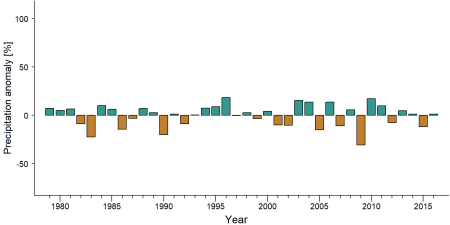
Precipitation anomaly in Proposed Kwa National Park -
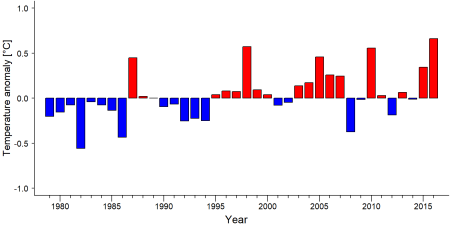
Temperature anomaly in Proposed Kwa National Park


External links
References
Rödel, M., & Glos, J. (2019). Herpetological surveys in two proposed protected areas in Liberia, West Africa. Zoosystematics and Evolution, 95(1), 15-35. doi:10.3897/zse.95.31726
Wild Chimpanzee Foundation. (2018). Activities of the Wild Chimpanzee Foundation for improved conservation of chimpanzees and their habitat in West Africa: Annual report 2017.
Wild Chimpanzee Foundation. (2025). Annual report: Activities for improved conservation of chimpanzees and their habitat in West Africa. https://www.wildchimps.org
Page created by: Aime Mizero & Isabel Ordaz-Nemeth Date: 2025-05-13